Exhibition Live Page
身皆己身
—— 香港百年性工作歷史計劃
A Body of One's Own - A Century of Hong Kong's Sex Work History
The Garage @ Heath
Works
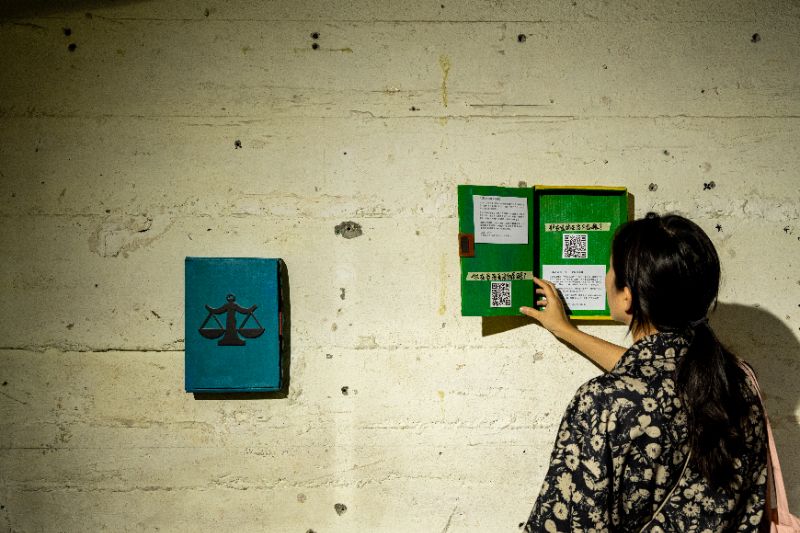
A Community Project with Shared Discussion, Learning, and Planning
The film-like spatial setup of this exhibition space is constructed through objects, voices, images and oral histories, inviting visitors to move along settings including urban nightlife, workplaces, and resting spots. These settings do not seek to replicate actual sex industry locations, but an intermingling of community experience, visual culture and contemporary labor conditions. Each section points towards how sex work is shaped by urban planning, regulations, consumer culture, media imageries and platform technologies, whilst preserving the imprints of how sex workers construct boundries, deliver mutual care, manage risks and maintain their dignity in their daily lives.
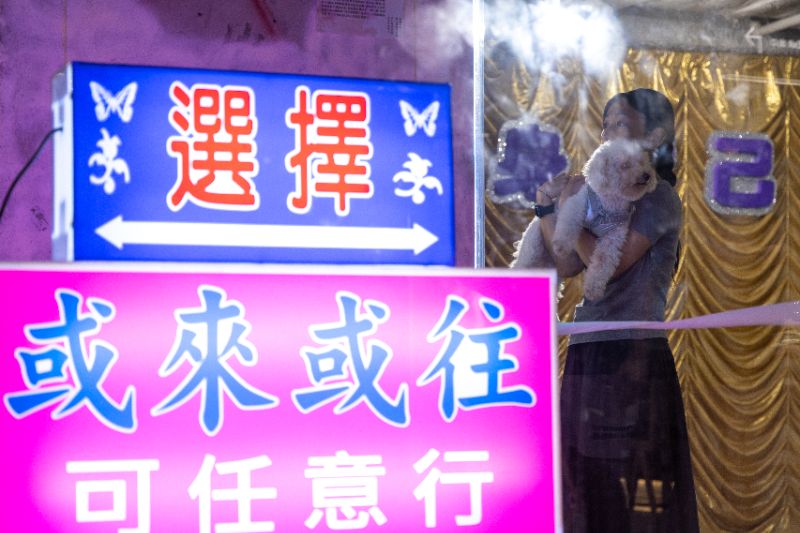
Lamp Sign and Legal Loopholes
The luminescent lamp sign towards the left of the entrance adopts the distinguishing visual language of night streets, made by crafters who have long catered to the needs of finger-pressing and related nighttime businesses around Yau-Tsim-Mong. Here, words meant for attracting customers have been replaced with advocating slogans, transforming lamp signs from mere faces of business places into also being opportunities for community dialogue. They preserved the defining efficiency and vibrancy of the trade’s aesthetics, while revealing to visitors how these words and phrases become marked as dangerous, sinful or debaucherous in societal functions. Hong Kong’s regulation on sex work has led to a paradoxical stance on its visibility. Sex work itself does not constitute criminal offense, in the form of individual sex workers operating from their individual studios. That said, “influencing others into indecent acts in public spaces, running or managing establishments for the purpose of conducting sexual acts, living on earnings of prostitution of others” could all be considered offenses under the Crimes Ordinance. When two or more sex workers operate from the same establishment, it could also become regarded as a premise used for prostitution. This regulation renders signs, leaflets, addresses and contacts information that poses a palpable risk to workers, and pushes work arrangements towards more dispersed and less visible forms. An established filming practice of coordinated police actions and surrounding news reports is that confiscated signs, advertisements, accounting books and photos of the establishment are often put together and filmed as a demonstration of “anti-eroticism” efforts. This exhibition project does not treat the lamp sign as criminal evidence or as a spectacle, but putting it back to the ownership of the laborers and the makers, so as to interrogate who has the claim to the naming of an industry, whose visual culture gets to be preserved, and whether sex workers may be seen in their own words when the city only permits sex work out of the spotlight.
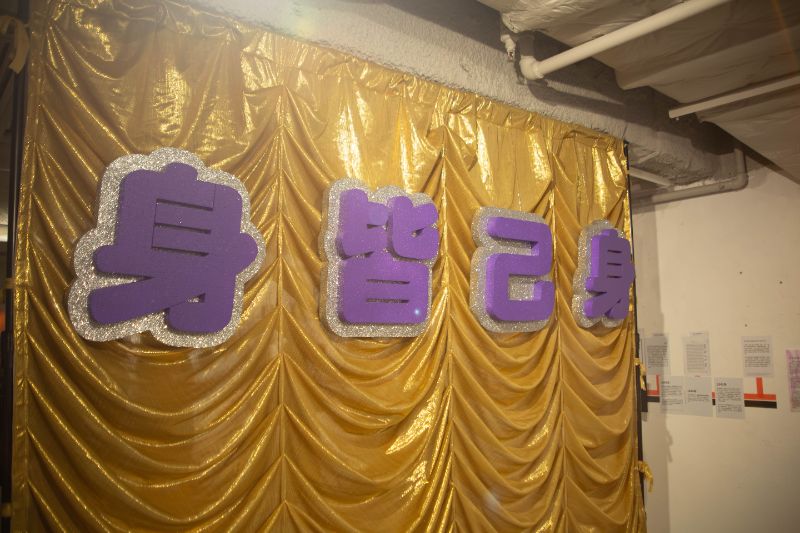
Stage Curtain: Collective Memory of Host and Hostess Clubs
Entering the exhibition space, one finds a glistening gold stage curtain laden with styrofoam letters, evoking the stage aesthetic that was symbolic to s host and hostess clubs active between 1980 to 1990s. Sequins, gold, red and large-scale three-dimensional letters crystallise the performances, alcohols, fêtes and consumption into a single moment. The club stage is a site upon which singers, hosts, bands and dancers demonstrate their talents, but also a social space that the audience partook in through requesting songs, toasting, gifting flowers and applauding. The club is woven into the collective memory of prosperity, success and the city’s entertainment. The underground space of Chungking Mansion at 36-44 Nathan Road, where this exhibition rests, is also the former site of My Fair Lady Nightclub and Restaurant Limited before the 1970s, and subsequently also of Chinese Palace Night Club during the 70s and Capital Restaurant & Night Club in the 80, and briefly home to several entertainment spaces including Golden Capital Restaurant & Night Club, before its current incarnation as the retail market and event space Heath. Chinese Palace Night Club was active in the 70s, with its trademark crowned neon sign and bright yellow wall colours, as the indicator of contemporaneous nightlife culture. It spearheaded the business model of host and hostess clubs at the time, and was highly influential in the industry’s subsequent development. Capital Night Club was the landmark major entertainment and dining establishment in the late 70s, which once saw performances by renowned singers such as Paula Tsui in their primes, as well as occasional beauty pageants. The “reenactment” here is not a purely aesthetic restoration devoid of its cultural context, but a juxtaposition of the site’s former incarnations with recent community narratives. The showstage used to entrap the city’s prosperity in glamour; the curtain here today will instead give space to the labourer’s stories. Hong Kong’s nighttime entertainment business was always populated with diverse forms of labor, onstage and offstage: Singers, waiters, barkeeps, dancers, janitors, doorspeople, bar promoters, hosts, and sex workers, each maintaining the smooth operation of clubs through their bodies, time, affect and professionalism. When public spaces like large-scale host and hostess clubs exits the city’s cultural history, these labours usually also fade away from public memory. In this “reenactment”, these labours enshrouded by the stage curtain be heard and seen for the first time.
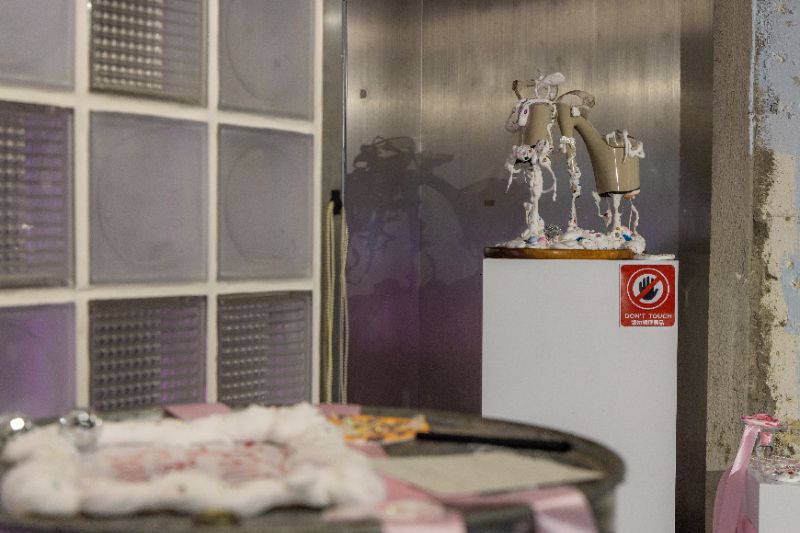
RILEY88
Pole Dancing Stage: Self-Expression and Source of Income // Between Worlds, 2026
Sculptural installation; pole dancing heels, wires, wooden board, clay, crystals and rhinestones
Across the glass-brick walls, visitors shall find a mobile pole dancing stage graciously loaned by a community member. The metal pole, detachable stand and transport-friendly structure point towards a line of work that needs to readily adapt to changes in workspace and the market. For the worker, this object is a tool for simultaneously honing one’s craft, rehearsing for performances, artistic self-expression and earning income. The marks and traces left on the stage preserves a form of bodily labour knowledge that requires extensive physical exercise, sense of balance, of rhythm, and live interaction capabilities. Pole dancing accrues multiple identities across pop culture, fitness industry, bar performances and adult entertainment. It can be regarded as body art, dancing exercise, stage performance, as well as being placed under a moralistic gaze due to its historical connection with the sex trade. This conflict is at the heart of what this exhibition section concerns: That society appreciates the visual effects of bodily crafts without willingness to acknowledge the labourer’s professional investment towards their body, stage styles and incomes. From the sides of the glass brick wall, the audience is able to see traces of lighting, silhouettes and patterns of movement, but is denied complete access to its full interiority. This cognitive experience mirrors the state of sex work in Hong Kong: It is often seen, conjectured at and commented on, but workers themselves may not be safely perceived. The stage is a reminder that body art and the sexualizing gaze has always contained a power relation; how sex workers choose to present, refuse, negotiate and preserve their bodies must be understood in conjunction with their working conditions, financial pressure and safe spaces. // The stripper heels have almost become a part of me. When I’m wearing them, I can be both soft and seductive, yet strong and powerful. I covered them with crystals and diamonds: playful, feminine, luxurious, much like the experience I create for my audience. On stage, at work, and now, here. I am always creating, creating fleeting worlds for others. But I imagine a world where sexy and beautiful can coexist. Where pleasure can be work, and work can still hold pleasure. Where I am free to decide what to do with my body. Where a body can give to others, without ever becoming something to be owned. And I wonder: If I capture all of this and place it here, does it finally become art? Or was it always art? IG: @ry.unraveled / www.unravelriley.com
A Moment of Rest
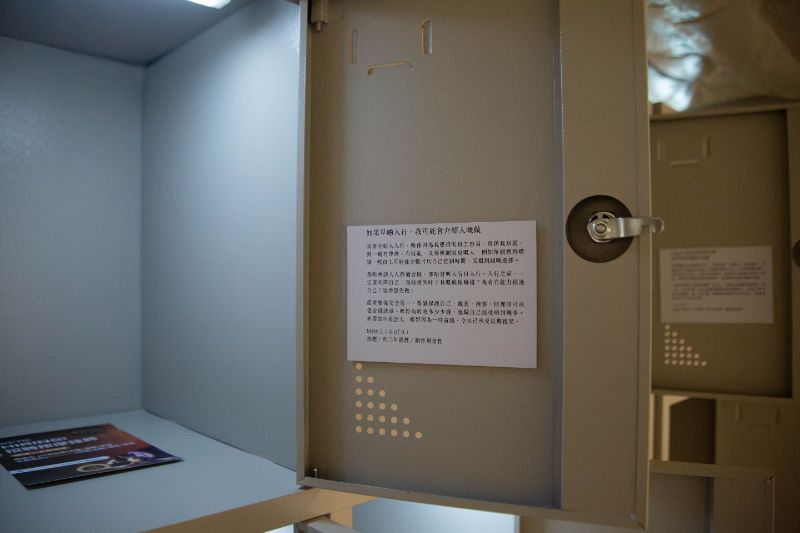
Towards the left of the space, with subtle lighting, is a resting corner for sex workers. Such private spaces holds the underrepresented side of sex work in public discourse: The wait before and after receiving clients, running errands, eating, replying to messages, chatting with co-workers, managing personal emotions and getting ready. Such moments are not packaged into products, but are essential conditions for sustainable work. The space sheds itself of vibrant visual elements to turn the attention towards labourer’s own right to rest, privacy, sense of safety and interpersonal support. Objects within the locker, such as photographs, household goods, lucky charms and notebooks, occasionally conjoined by statements penned by participants, provide the legends to a personal, interior map. Work clothes are not simply costumes and uniforms, but affective objects with texture, sizes, outfits and preservation methods that contains responses towards clients, workplace arrangements, personal tastes and bodily experiences. Mahjong table and fengshui compasses contain within them workers'day-to-day knowledge of stress-relief, luck and futurity. Mahjong noises could be the bantering between friends during a gathering, but also a rhythm to keep one’s mentality in check within indefinite wait periods; the fengshui decorations, on the other hand, harbour wishes for peace, income and familial stability. Personalised decorations are workers’ life wisdom that allows them to give themselves peace of mind and mutual support in a highly volatile environment. Sex workers are, before labourers, persons with relations, families, anxieties, and hopes.
A-Keung, AI Sex Worker
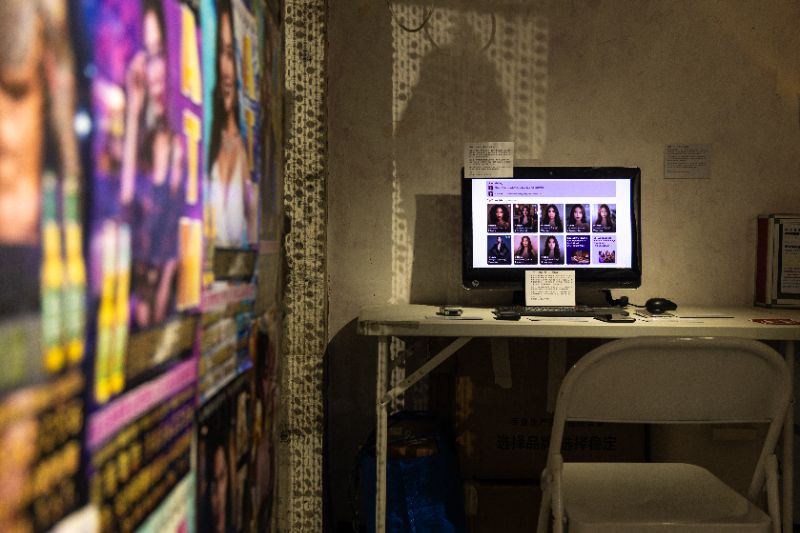
Walking into the smaller room, visitors may have an engaging conversation with the AI sex worker “A-Keung”. This interactive installation uses AI-generated contents as a medium to give the audience a chance to meet in person a character that can respond, imitate a sense of intimacy, but does not have a corporeal body or labour protections. The wall of host and hostess club posters with generated figures harkens back to the entertainment publicity visuals that once populated Nathan Road as well as many other major streets of Hong Kong, while ushering them into a digital age: Human images may be generated, edited, reproduced as well as infinitely distributed, as desire becomes restructured through clicks, subscriptions, tips and algorithms. In the last decade, smartphones, social media, paid content platforms, instant messaging and streaming technologies have all drastically reconfigured how sex work and adult contents are being produced and facilitated. Through the internet, workers could contact clients, process pre-orders, release images, build a personal brand and provide online interactions. As such, workplaces become even more dispersed and work time more fragmentary. These tools “A-Keung” does not provide a technical answer for the problematics around sex work, but its agency lies in the ability for piercing introspection: If providing company, flirting and being a good listener may be automized, could it conversely make visible the affective investments in human labour? If virtual figures can be consumed in place of actual human beings, who will bear the price of data, right of portrait, stereotypes and exploitations? This exhibition section also reminds visitors that AI models are limited in the responses they are able to make and is in no way a substitute for human support, consent culture, labour protections and crisis intervention. Science reshapes the forms of work, but it does not cancel sex worker’s need for safety, incomes, fairness and dignity.
Who’s Looking at the Female Figure Sign?
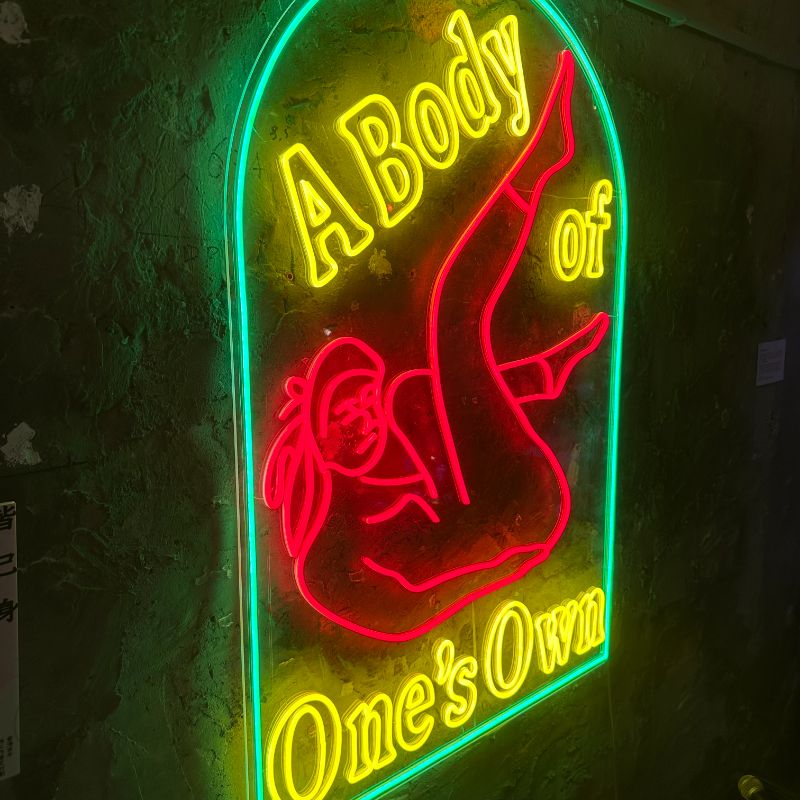
The female figure sign takes its inspiration from signposts common among bars and adult entertainment establishments scattered across Lockhart Road, Wan Chai, towards the end of 20th century. Neon lights, silhouettes, exaggerated postures and English phrases constitute the consumer symbol for a culturally diverse clientele. It exceeds any single instance of sexual objectification, and with the passage of time becomes a spatial history of Wan Chai along with its harbors, travellers, expatriates, alcohol consumption, performance culture and real estates. Wan Chai’s nightlife has long been imagined and reimagined through Hong Kong’s film productions, newspapers, tourist publications and street tabloids, as an evidence towards global logistics and orientalism, as well as the site of deeply gendered labor. The entertainment industry of a port city often accompanies the ebb and flow of its shipping industry, military deployments, business travelers and local economic cycles. From Wan Chai’s seafront to Lockhart Road, and the pubs and nightclubs of Sheffield Road, have all evidenced crowded nighttime consumption networks in the postwar economy as well as transnational traffic. The subsequent rising rents, land redevelopments, clientele shifts, regulation pressures and changing consumption patterns led to the closure, migration or business shifts of many of the establishments. Today, the remaining signs, photographs and oral stories provide a record of how the city’s nighttime living spaces changed under the guise of development, and how workers reestablished their work and safety in an unstable market. The sign’s female figure acts simultaneously as a reminder of the power to observe. It plays into the client’s imagination, while concealing the complex livelihoods of performers, hosts and sex workers. It extends an invitation to the visitors to recognize their own habits of looking, before entering the spaces of working conditions, affective labor and personal voices long shrouded under neon lights.
Leather Sofa, Dice Cups and Beer Barrels: Memories and Their Fragments
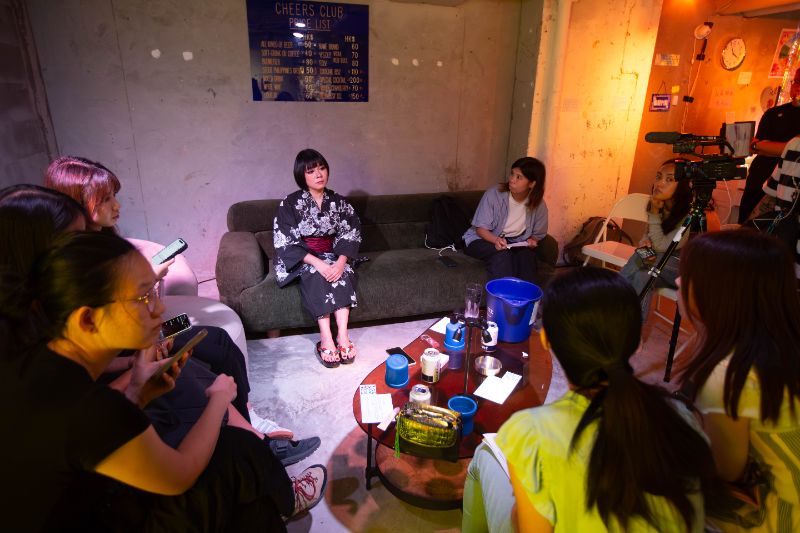
The sofa area towards the back of the exhibition space contains a menu from a run-down bar as well as other night club decorations. Menu in their original contexts are used to mark the name of the store, drinks offerings, events and other business information, but has now been removed from their streetside settings and become a souvenir of social and industrial shifts. Sofas, desks, disco lamps, dice cups and beer barrels are no longer in a raucous setting, but a corner to sit, rest and listen. Oral stories shared by community members are played from the wall, allowing audience members to engage with life experiences so often caricatured and ridiculed at a slower pace. Bars and clubs contain many interrelated, but clearly distinguishable types of work, such as waiters, bar promoters, resident performers, dancers, bartenders, escorts, security and janitors. Some sex workers will establish contacts with guests through clubs, while others maintain their distance from bar events. One must avoid equating all club labours as sex work, whilst pointing our the gendered labour, affective labour, appearance requirements, alcohol culture and customer power within nighttime consumer space poses similar risks towards different types of work. When a bar ceases operation from rents, economy cycles, licensing policies, community restructuring and consumption habits, the support network woven together from neighbours, colleagues and frequent patrons also disappears. The menu preserves a vanishing street view, as the narrators dictate the way their own work, friendship, worries, jokes and choices are told. Sitting on the sofa, visitors are not voyeurs into their private lives but invited to become their audience.
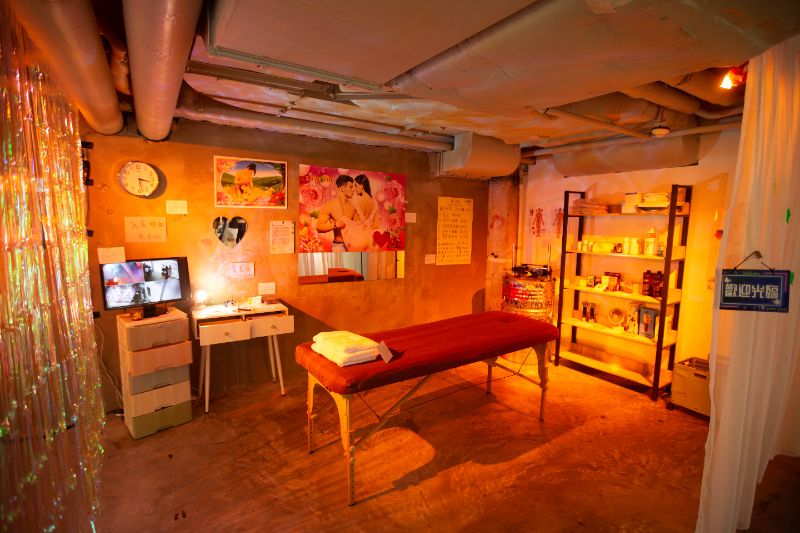
Massage Parlor: Intimacy and Boundaries
The massage parlor behind sheer curtains are placed alongside mellow lighting, tidied bedding, a mirror, special fragrance and posters to make up for a seemingly comfortable workplace. The posters of beaches, blue sky, white clouds and foreign figures evocative of a dated romanticism display a visual language of intimacy and relaxation packaged through consumer culture. For the clients, these image imitate an imaginary escape from daily life; for workers, it is simply the backdrop to the drawn-out working hours from day to day. These tender setups are juxtaposed with the harsh conditions of reality, demonstrating how romantic imagination permeates a workplace characterized by price negotiations, boundaries, time and safety. Current regulations set the legal limit within individual workers alone in their studios, but punish co-renting spaces, mutual care as well as hiring support personnel, further pushing them out of public space. All these conditions bring actual security concerns upon sex workers. Solitary workers cannot easily find readily available peer support under high-risk circumstances, and may also refrain from reporting their cases or seek help out of concern over exposing their identity, losing their workplace or having to deal with law enforcement. Researchers and human rights groups have pointed out that the legal arrangement that sees co-working sex workers as operating a premise for prostitution hampers sex workers’ ability to take up collective security measures. The comfortable design in the space carries a question: How does a place that seems so private and serene also become the place where workers are most isolated?
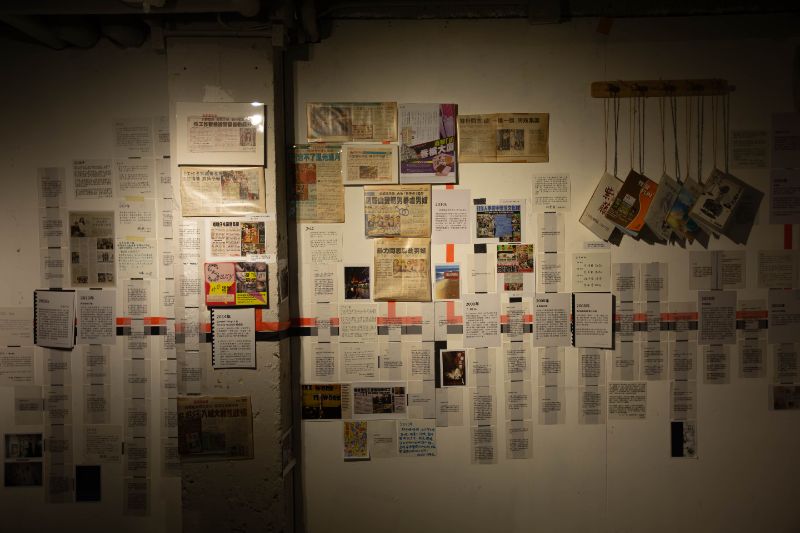
One Hundred Years of Hong Kong Sex History
Cutting through the centre of the space is a timeline of the history of sex work in Hong Kong over a hundred years. It traces the regulations, urban development, social movements, cultural records and community service since the establishment of the colony, conjoining macrohistory with personal life histories. This timeline does not treat the history of sex work as the rise and fall of an isolated industry, but places the history of sex work’s development as an entry point towards understanding Hong Kong: How colonial rule has regulated the body of its subjects, how port economy boosted population influx, how war and military deployments restructured desire and risks, and how post-war prosperity expanded nighttime consumption, how real estate development and digital platforms reconfigured places of work and ways to take in clients. The beginning parts presents the colonial government attempts at regulating prostitution, venereal and other infectious diseases as well as Chinese-Westerner segregation, and its close relation to racialized urban spaces and sites where male European customers are served. Ordinance amendments, newspaper clips, club and bar advertisements, police and legislative council documents, service organization leaflets, community publications, historical photographs, artworks and media interviews allow the visitors to think and study with the aid of historical material, news reports, memories and artistic recreations. The timeline also records historical moments of the three co-organisers and their community members. Founded in 1993, AFRO HK focuses on giving social support and advocating for the rights of female sex workers, including sexual, mental and women’s wellbeing, as well as offering education on one’s legal rights. Teen’s Key started in 2011 with a focus on the sexual and reproductive health of young women as their rights, and providing comprehensive crisis intervention and support for disadvantaged young women. Midnight Blue has focused on supporting male and trans sex workers since its founding in 2006. All participants have added to the community timeline with a year, a moniker, a voice note or an object, telling their experience of entering the profession, being a volunteer, facing law enforcement, garnering support, building peer relationships or advocacy. Such a history is no longer dictated by government, media and scholars, with agency and authorship returned to the hands of sex workers and allies, collectively preserving, questioning, resisting, and rewriting.
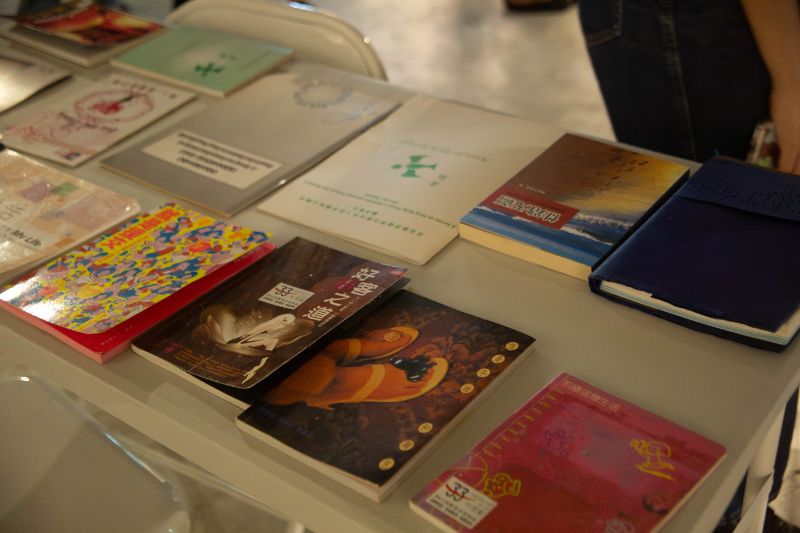
Reading Corner
Publications and reports published by Teen's Key, AFRO and Midnight Blue, and reference books of the project.